GTSM in CALIFORNIA
High precision and high stability measurements
of the horizontal strain field in a region are made in California
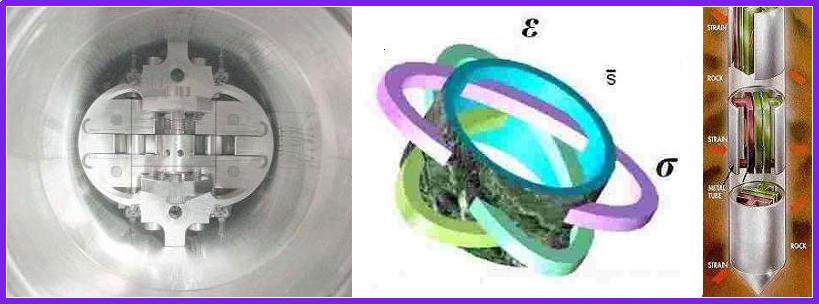
using a Borehole Tensor Strain Measurement instrument (BTSM). These
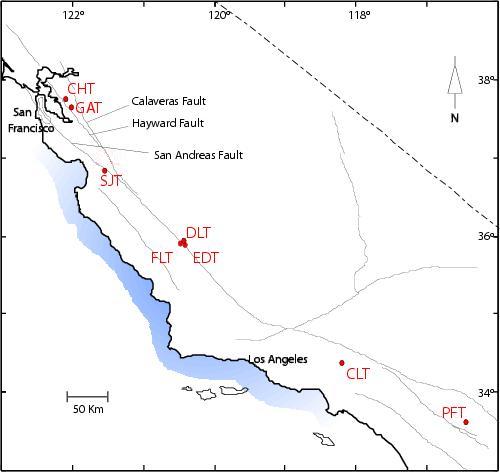
instruments are installed at a depth of 100-200 metres at 7 sites in
California. The sites are shown in red in the accompanying map.
A calibration method that incorporates cross coupling
of remote areal/shear strains into instrument areal/shear strains has
brought strain tides measured by the Pinon Flat GTSM (borehole diameter
200mm) into very good agreement with strain tides independently measured
by the co-located LSM (dimensions ~1km). The cross coupled calibration
has also yielded good agreement between the GTSM observations of the
1992 Landers earthquake and geodesy-based modeling, and co-located EDM
measurements (Hart,Gladwin,Gwyther,Agnew and Wyatt 1996). This
paper is reproduced with kind
permission of JGR.
The short baseline GTSM instrument shows higher short
period noise than the LSM throughout the record, as is to be expected.
These instruments consist of a three component plane strain module
operating at strain sensitivity of 10-10 and support data logging
systems. As deployed they provide data sampling at 30 minute intervals
for transmission via satellite for permanent archive purposes. The
instruments provided by this project are unique in the NEHRP program
in that they have provided continuous tensor strain data for the past
twenty years at a sensitivity not achievable by any other instrumentation.
Data are also made available in near real time in the USGS Menlo Park
computer system.
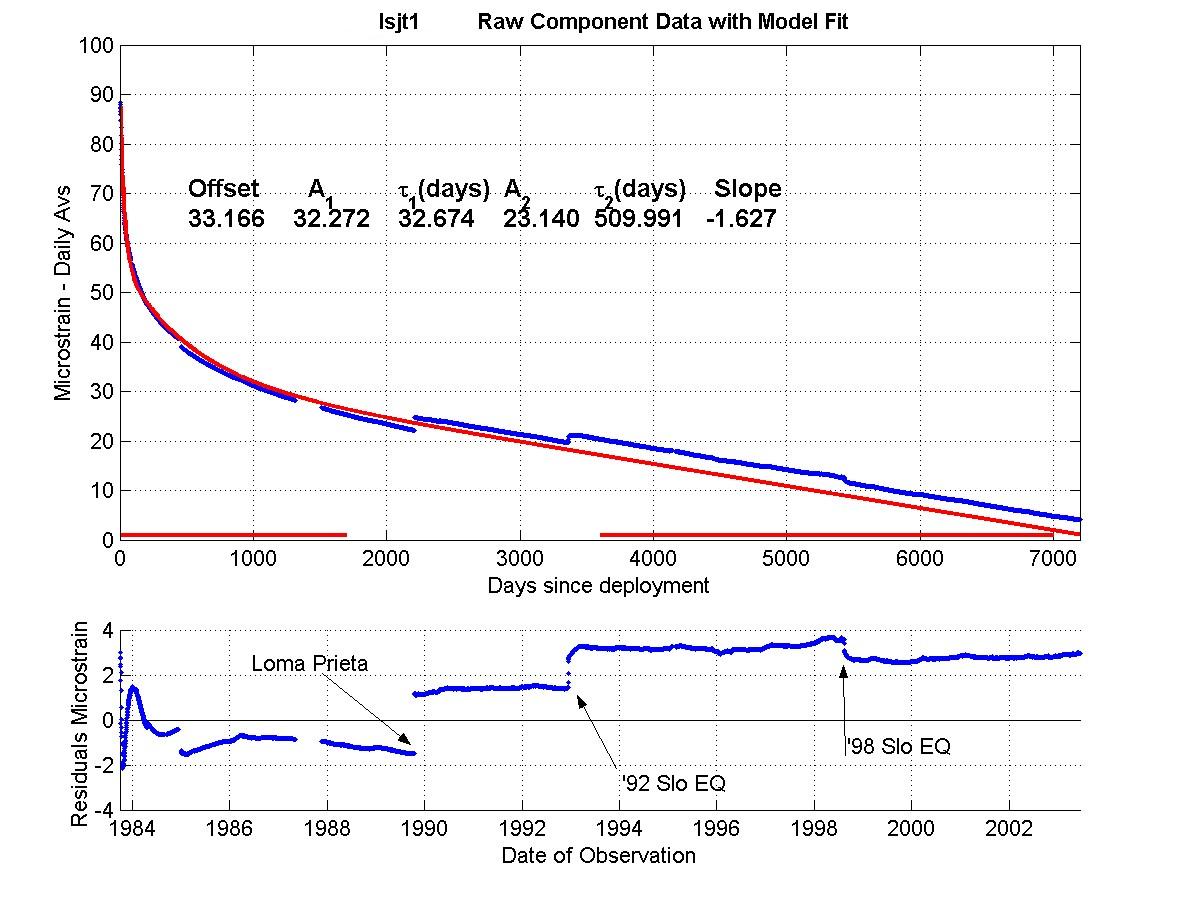
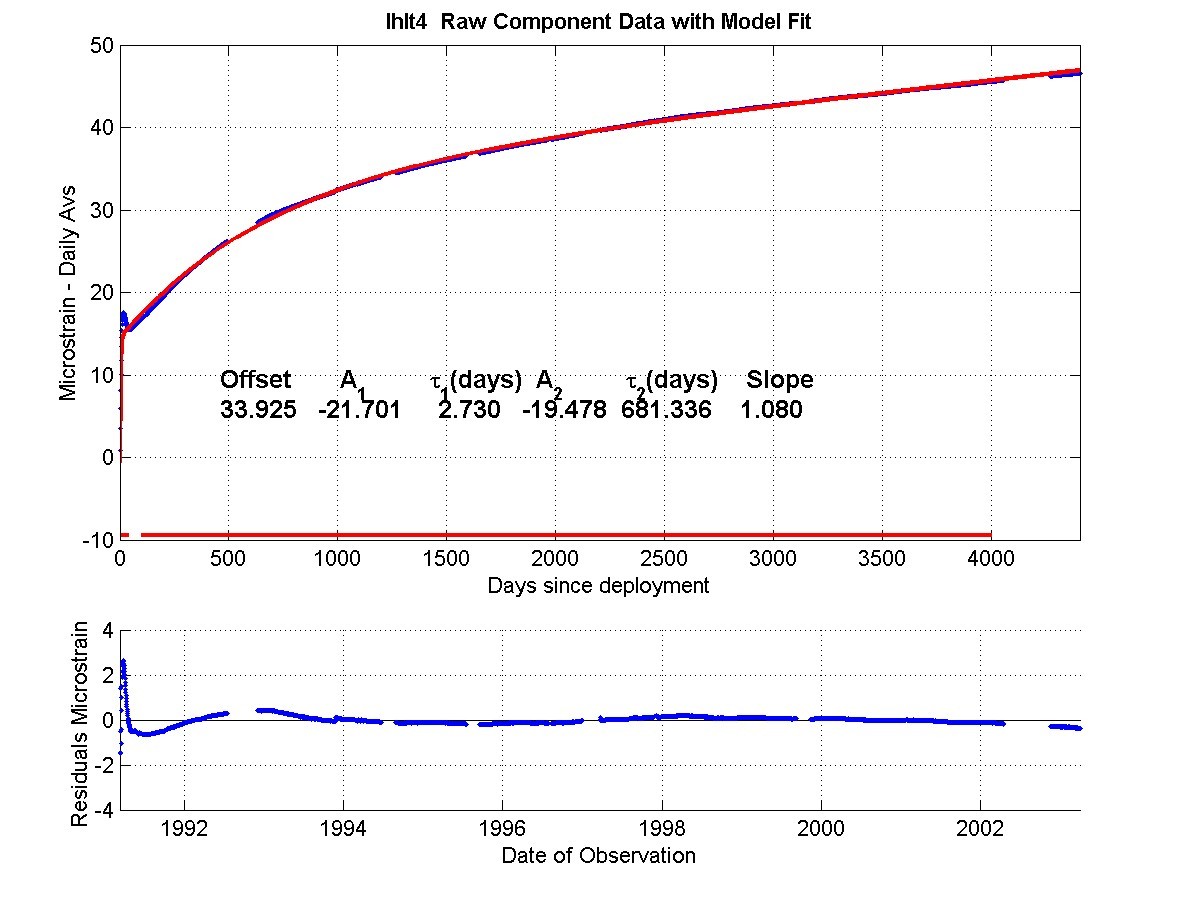
Residual data are recovered from the raw data by extracting
least squares fitted exponential(s) and a linear function which describe
the processes of curing of the grout and recovery of the borehole,
after drilling and installation disturbance of the virgin stress field.
In August 2003, the borehole recovery exponentials
were updated from values determined in the early 1990's to incorporate
the additional 10 years of data length now available. Changes of
strain rates calculated from these residuals are unaffected by the
exponential removal procedure and allow the very long term
stability of the instruments to be quantified.
For non-tectonic sites as we have in Australia, instrument
stability is easily demonstrated.
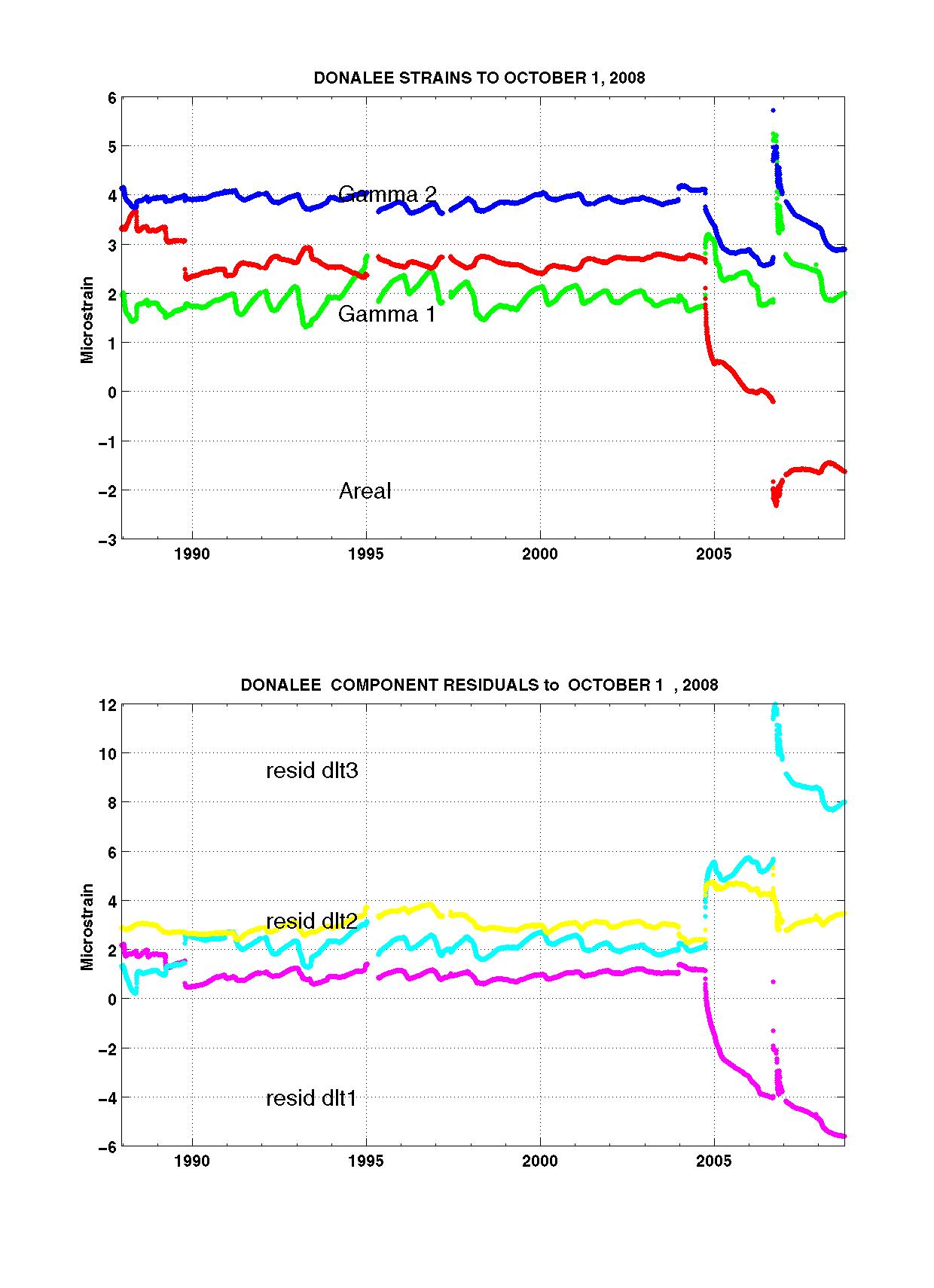
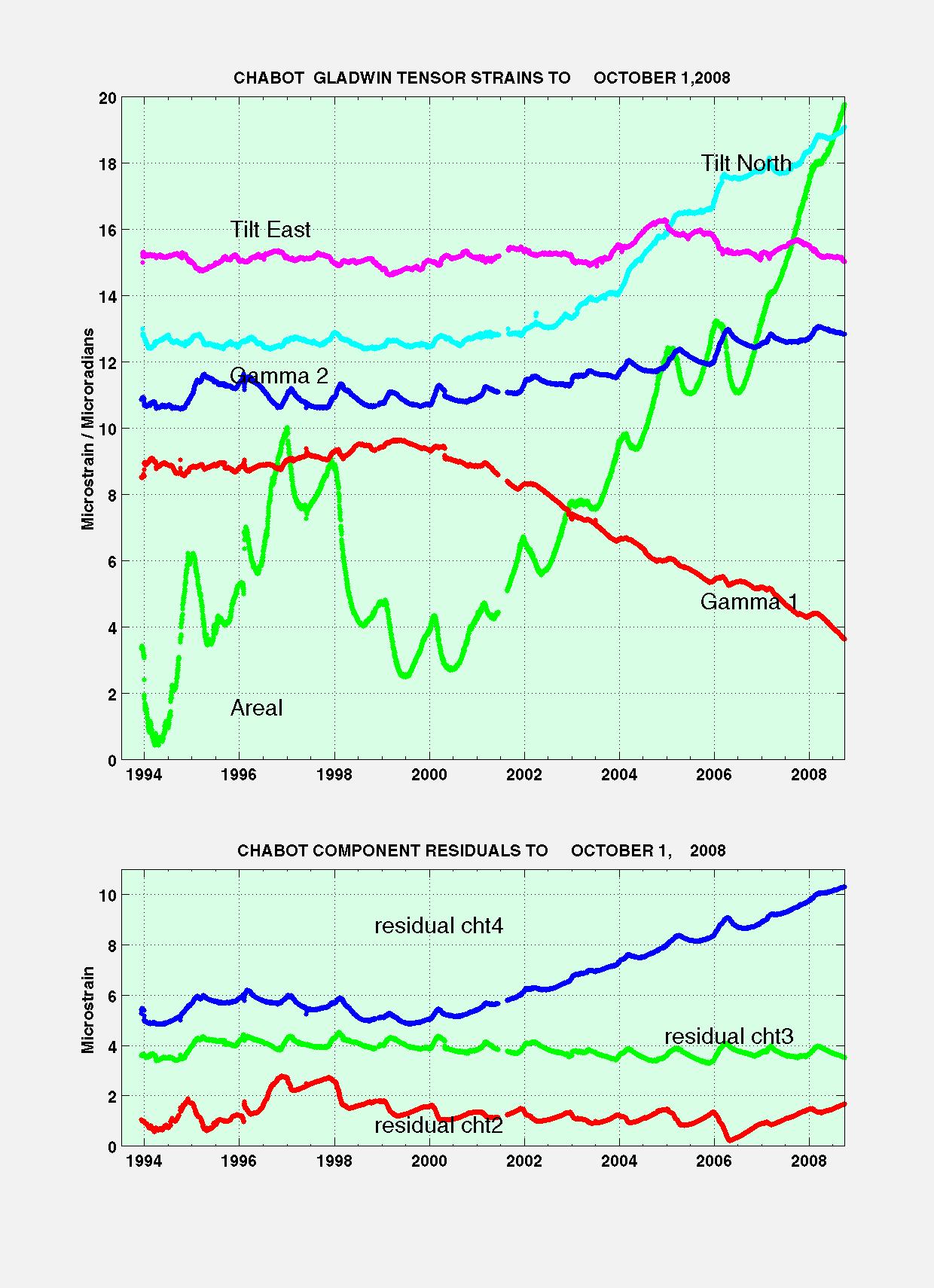
- CHT and GAT are situated in
the East Bay region of San Francisco Bay.
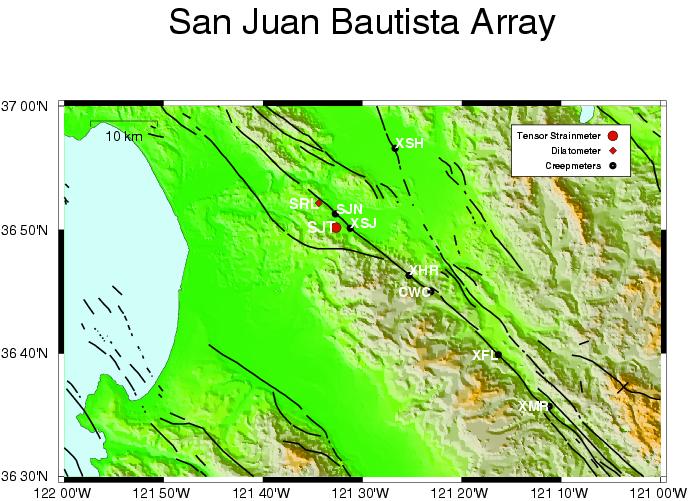
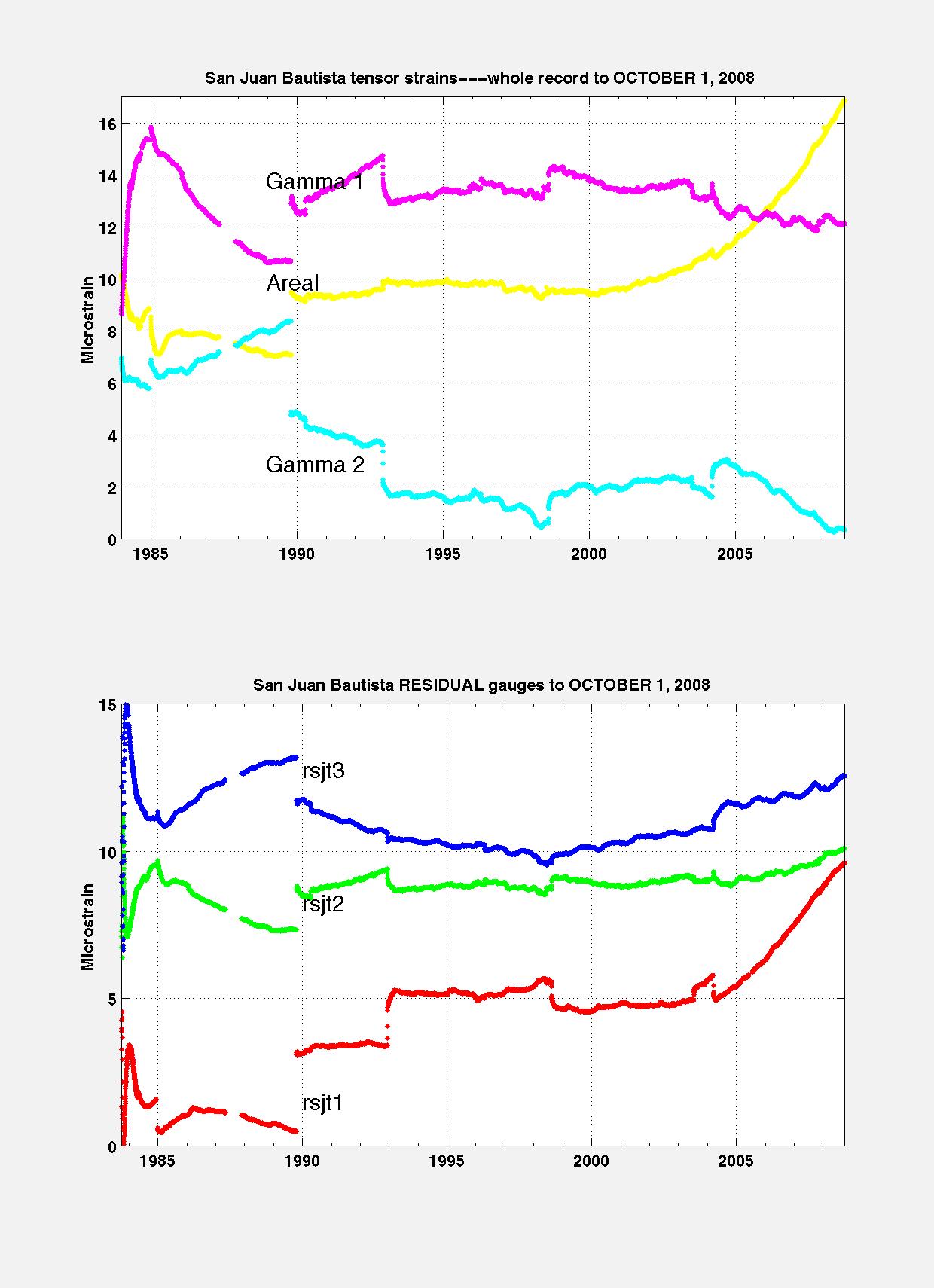
- SJT is close to San Juan
Bautista to the south of San Francisco
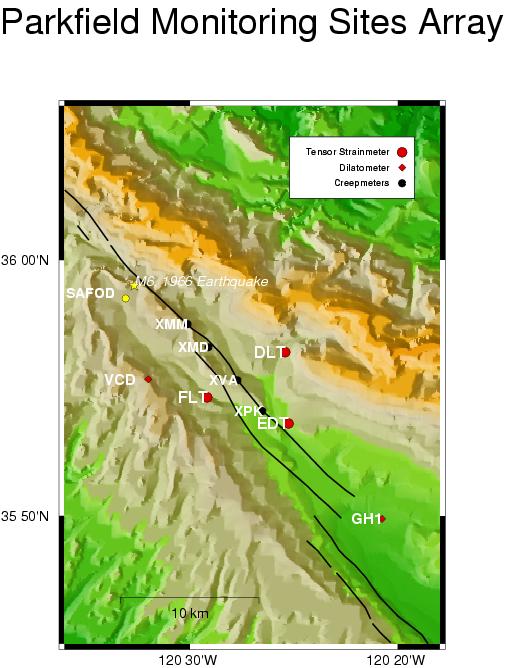
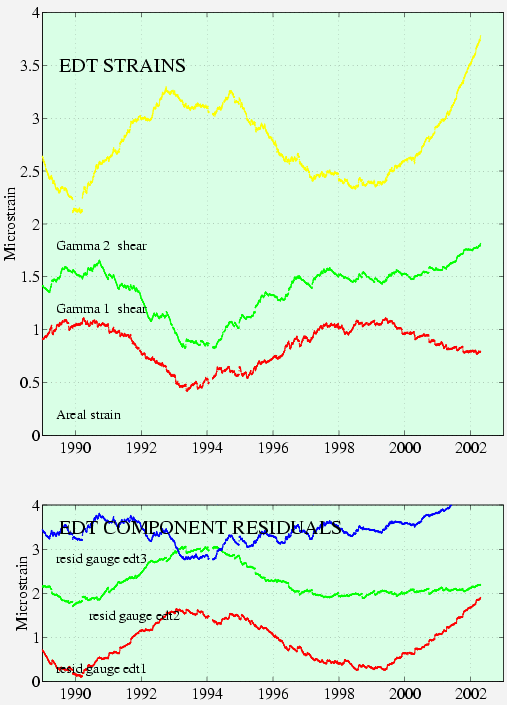
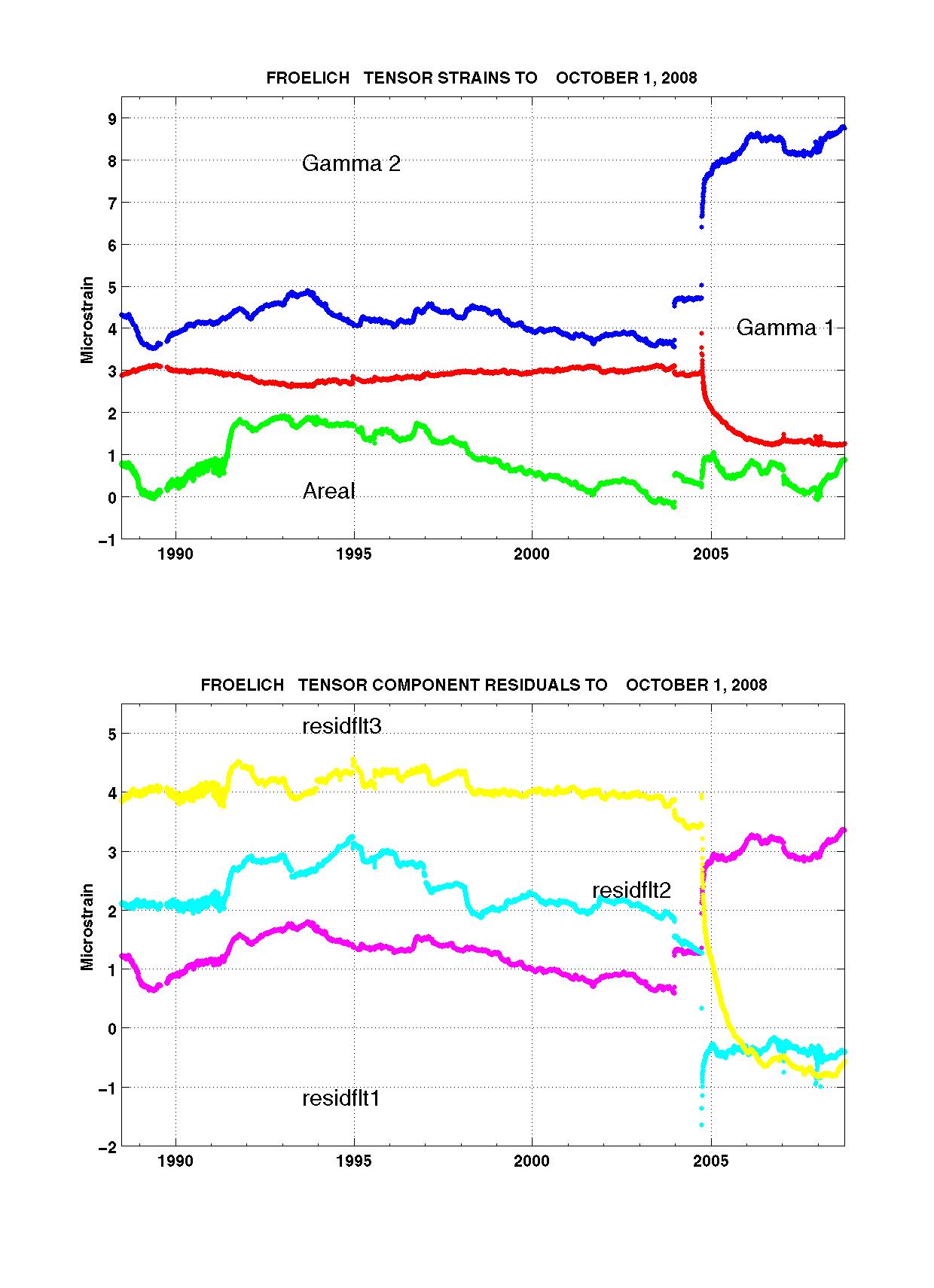
- EDT, FLT and DLT are situated
in the Parkfield region of central California
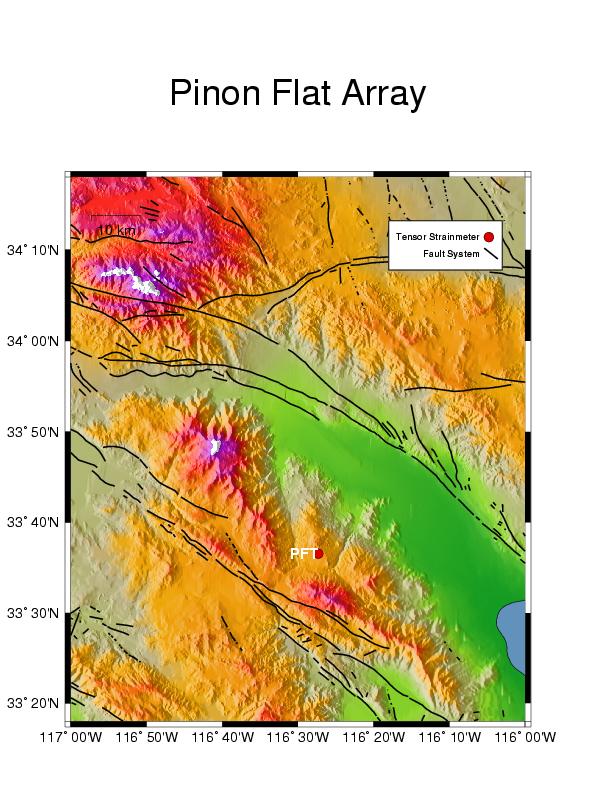
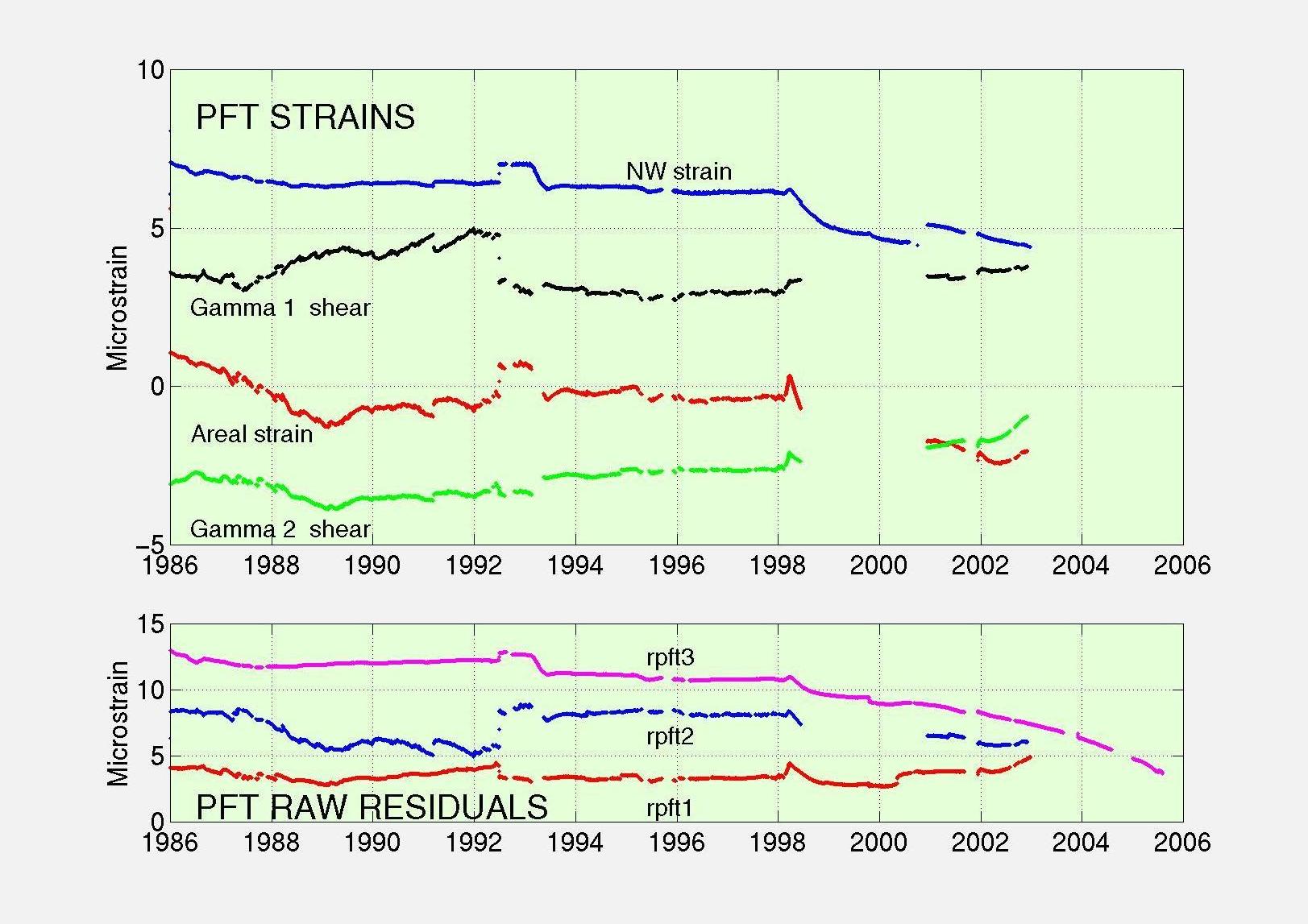
- PFT instrument is situated
in Southern California, in the mountains near Palm Desert.
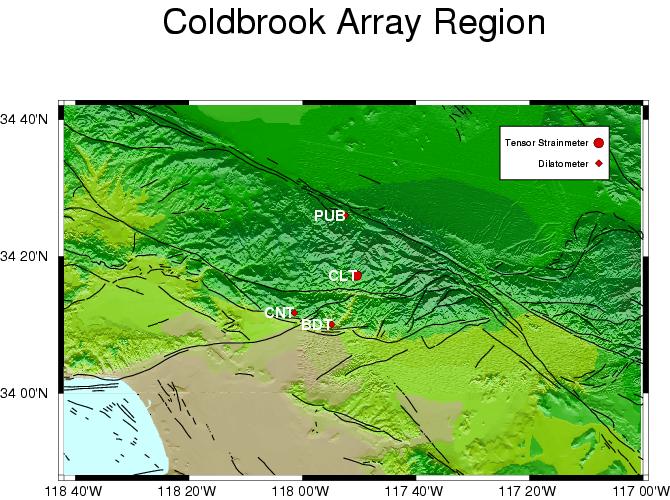
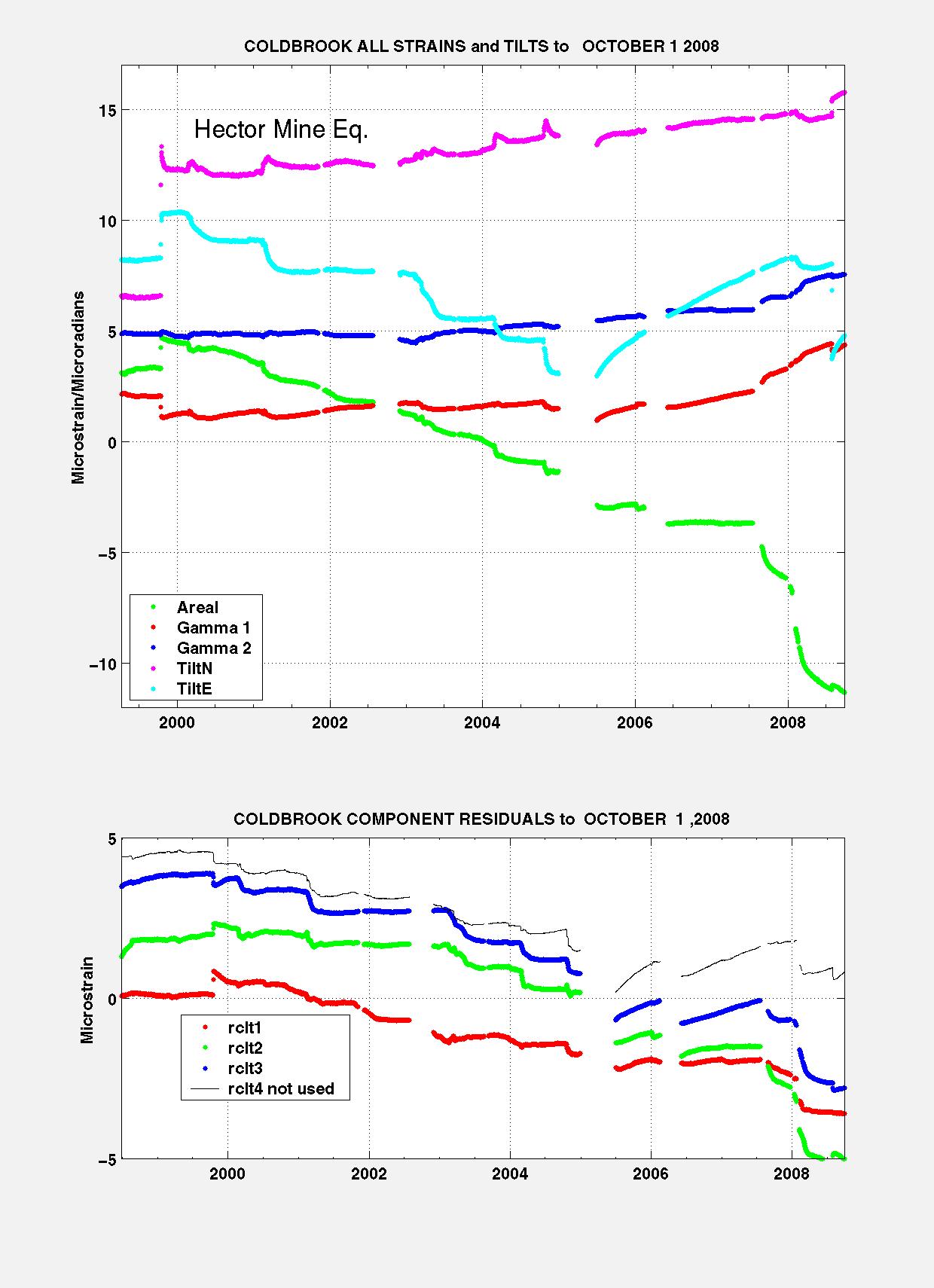
- CLT is situated in the
Los Angeles region
These instruments provide strain data on
- Long term strain accumulation. Data records are available
from SJT and PFT
from 1984, and from the three Parkfield sites EDT,
FLT and DLT
from 1987, and from the East Bay sites GAT
and CHT and from 1993, and the most
recently installed station CLT near
Los Angeles from late 1996. Borehole tilt measurements at GAT and at CHT
are also available since 1993 and at CLT
near Los Angeles since early 1997.
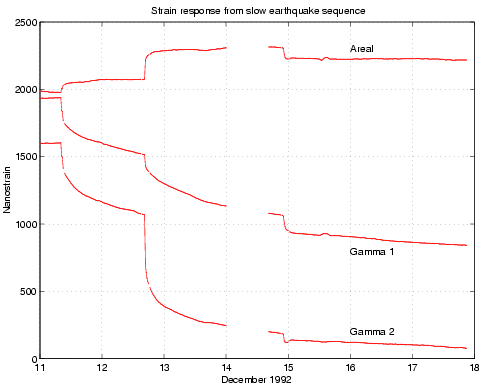
- Medium term strain changes associated with earthquake activity
and other fault processes. The sample
data shows a slow earthquake sequence recorded at SJT in 1992.
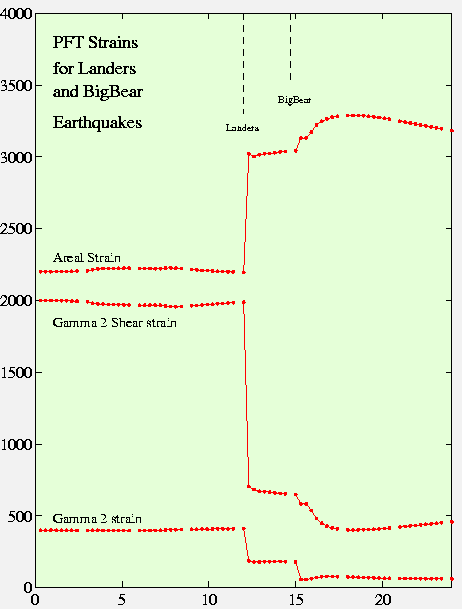
- Coseismic strain offsets useful for constraining earthquake
source mechanisms. The sample data
shows coseismic strain offsets observed at PFT during the 1992 Landers
and Big Bear earthquake sequence (100 km from PFT).
Some other related sites :