|
GTSM Technologies |


|
Home |


|
GTSM History |

|
Tensor Strain in California for NEHRP |
|
Tensor Strain in Taiwan |
|
Tensor Strain for PBO / Unavco |
|
Tensor Strain in Japan |
|
Mining Applications |
|
Stability Research |
|
Frequently Asked Questions |
|
Advanced Frequently Asked Questions |
|
Publications |
|
Contacts |
|
GTSM History |
HISTORY of GTSM
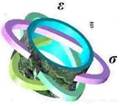
The Gladwin Tensor Strain Monitor (GTSM), so named in the USA to distinguish it from other borehole strain systems, measures strain in the earth due to tectonic or engineering stress. The first field instrument was installed in 1972 in an underground ore-body in Queensland.
It was developed as a complementary technology to a direct ultrasonic stress measurement system devised for tectonic studies in 1969 during graduate work.
The GTSM system was the first high precision, high stability multi-component (tensor) system developed for deep boreholes. It allowed direct evaluation of variation of the amplitude and the orientation of the principle components of strain. Field deployments first occurred in 1975 in support of ultrasonic stress monitoring studies.
In 1977, tests of the strain system were performed in the Praesidio vault in San Francisco for several months to allow investigation of its potential in tectonic strain measurement.
Later proposals to deploy the system for various applications in mining were implemented and ultimately, systems were deployed in an ore-body to investigate dynamic loads in large scale crown pillar structures. By 1979 initial applications of the strainmeter to tectonic studies was occurring because of its intrinsic stability and dynamic range.
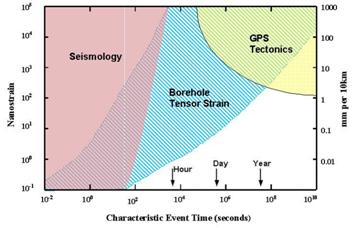
The design completely covers a massive observation gap in the frequency domain between seismological measures of earth deformation response and the large scale electronic distance measuring instruments (now replaced by differential GPS systems). The system overlaps both the GPS and seismic bands by a couple of orders of magnitude.
Over the next fifteen years, thirteen (13) systems were installed in tectonic settings to allow extensive analysis of the potential value of this domain of measurement.
In the US, installations occurred as follows: 1986 (3 systems), EDT, FLT and DLT 1996 (1 system built in 1992), CLT
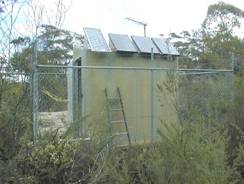
In Australia, in March 1991, two systems were installed in the Dalton/Gunning area west of Canberra, for the Australian Geological Survey Organization (now Geoscience Australia). The purpose of these units was to evaluate the long term stability of the systems. The region has very low seismicity, and a low long term noise was achieved.
In 1992, three systems were installed to monitor long term long-wall mining induced subsidence beneath the Cataract Reservoir area south of Sydney.
Outcomes of the preliminary studies. By 1993, the long process of demonstration of the value of GTSM technology to the subject was reasonably advanced and an early stage of general acceptance had begun. Many new observations were documented. These included several slow earthquakes observed at multiple sites, post seismic changes as large as 50% of the seismic event and with similar source dimensions and characteristics, and associations between slow events and surface creep. Details of these studies are included in the publications listing.
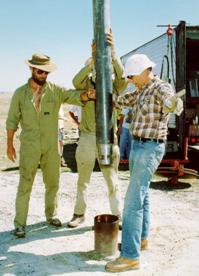
In 2004, the system was selected for the US Plate Boundary Observatory where over 70 systems were deployed between 2005 and 2009. Thirteen systems were installed in Taiwan between 2003 and 2010, four were installed in Japan in 2009, and two in Korea in 2010. |